

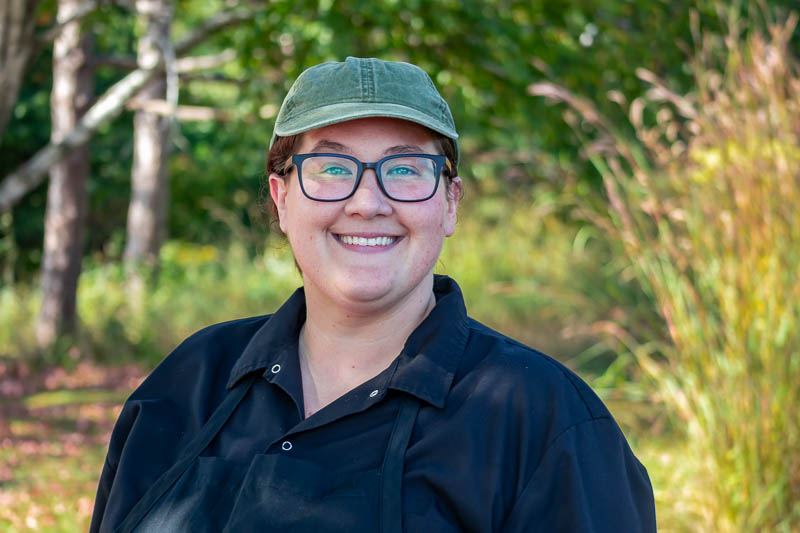
Can you tell us about your journey into the culinary world and how you came to join the team at Holy Wisdom Monastery?
My first job was in a summer camp kitchen, and the majority of my jobs have been in food service since. I was looking for a job that aligned with my values, this last spring, and was led to Holy Wisdom Monastery. I am so thankful to have found a place that is filled with so much joy and light!
What does a typical day look like for you in the culinary department, from meal preparation to interacting with guests or the community?
Each day is a little bit different, which is part of the fun! We feed a different amount of people every day, depending on the groups and events, but in general the days start with coming in, getting to greet my lovely coworkers and hearing from Felipe about what we’re doing that day. Then it’s onto meal prep! One of the biggest variables is the different dietary restrictions of the groups we serve, so a fun part of my day is figuring out how to navigate that and make something we know everyone will love. Many people probably don’t know this, but the main fridges are on the lower level and the kitchen is on the upper level, so I am going between the two floors with my little cart several times a day to get the food we need for the meal. It’s actually one of my favorite things! I very much enjoy the opportunity to see some of my coworkers in the halls and pass the oratory, which reminds me to pray as I work. After working with Felipe to cook the meal, I get to meet the people who are coming to eat and then clean up from the day. The one constant of everyday is dishes, and I love ending my day with everything clean and set for the next day.
Holy Wisdom Monastery emphasizes Benedictine values like hospitality and stewardship. How do these influence your approach to cooking and menu planning?
My career in hospitality has been marked by the belief that it is so important that people feel that they are welcomed, can come as they are and that we would love to see them again. It is wonderful to work in a place that shows that kind of hospitality on every level. I believe that feeding someone is one of the easiest ways to invite someone in and create a pathway to caring for the whole person. In the kitchen, we are given the task of using the food that we are given, well, whether it has been purchased or has come from our gardens. We take that task very seriously and work towards having very little food waste, which is something I am passionate about.
The monastery is known for its commitment to sustainability and prairie restoration. How do you incorporate local, seasonal or eco-friendly ingredients into your dishes?
I started in the spring of 2025, so I was thrown right into learning about what produce would come from the gardens onsite. It was very exciting to learn about all the food we would have access to and learn how it would be incorporated in many ways into our food over the next few months. It was fun to learn about new ways to use the same ingredients that felt new and fresh, so that we could continue to use the resources we have while producing nutritious and exciting dishes.
What are some of the most memorable meals or events you’ve prepared for retreats, gatherings or visitors at the monastery?
One event that comes to mind, because it was recent, was the chili cookoff! It was very exciting to see so many people show up, to have so many chef’s in our kitchen and to learn what REAP is doing in Madison.
There have been many other weddings and funerals and groups that I could talk about, but I find it just as meaningful, if not more so, to prepare the ‘everyday’ meals – to do the consistent work of feeding those who are here every day or are coming by for retreat. It feels quiet, consistent and steadying, and I really enjoy that kind of work.
As part of the culinary team, how do you collaborate with others in your team or volunteers, to create nourishing experiences?
Our team is small and none of what we do would be possible without our volunteers. Felipe has so much knowledge and experience, and it is such an honor to learn from him. I love getting to know our volunteers and working alongside them. The camaraderie in a dish pit after a big event when you know it’s gone well and you’re thankful for each other’s help, is a unique and wonderful experience. I hope that the love and care put into each meal is evident to those who are eating it!
Do you have a favorite recipe or ingredient?
There is a monastery cookbook coming out in the future, so you’ll have to wait for the recipes! But for ingredients, I would say the beautiful tomatoes grown in the sisters’ garden! They were the gift that kept on giving this summer and fall, and it was so exciting to have a fresh ingredient like that on hand all the time.
What challenges have you faced in balancing creative cuisine with the practical needs of a monastery setting, and how have you overcome them?
The biggest daily challenge is to make sure we are making food that is nutritious and also able to be eaten by everyone with regard to their dietary concerns. It’s really important to us that people don’t feel like they have to pick and choose what they eat, but that we are presenting them with a meal that they can enjoy regardless of their needs. An example is that if we have a group that has several vegetarians, we will most likely make the entire meal vegetarian to account for that.
How has working at Holy Wisdom Monastery shaped your own perspective on food, community and well-being?
This job is reminding me of many things that I learned when I was younger, working in the camp kitchen, that I haven’t been able to use in a while, while working in kitchens that are not in faith spaces. The kitchen at Holy Wisdom is probably the opposite of what you would envision if you imagined a commercial kitchen. The food that we produce, thanks to Felipe’s leadership and guidance, is excellent and is held to a high standard, and the kitchen that it comes from is marked by an attitude of collaboration and respect. I think that working in a place where attitude is expected as opposed to a place where productivity and efficiency are most important is so much healthier, and I’m very happy that I get to be a part of it.
What piece of wisdom from your culinary experiences would you share with our Weekly Wisdom readers who want to bring more mindfulness or joy into their own cooking?
It’s not that serious! You can take what you have in your kitchen and make something delicious. Your produce doesn’t have to be perfect, your knife skills don’t have to be amazing, you don’t have to have all the right kitchen tools or gadgets. I believe that one of the great joys of life is creating food for people you love and watching them enjoy it, and that the connection that is created is way more important than something being ‘perfect.’ Make it, sit down and enjoy it and receive the gift that is being together.
Comments 3
This is lovely, Stephanie! As a kitchen volunteer, you are such a joy to work with. Your kindness, positive energy, and cooking expertise are just a few of the reasons why volunteering in the kitchen is so much fun.
Thank you!
What a beautiful article. Thank you Felipe for writing it and to Stephanie for making the decision to be part of Holy Wisdom communities. Stephanie, your thoughtfulness about the role of food and cooking couldn’t be more loving. I’m so glad you found us.
It is so wonderful to have you at the Monastery, Stephanie! Your presence here brings joy, sincerity and grace, and I am very happy for you!