Holy Wisdom Monastery is Net-Zero!
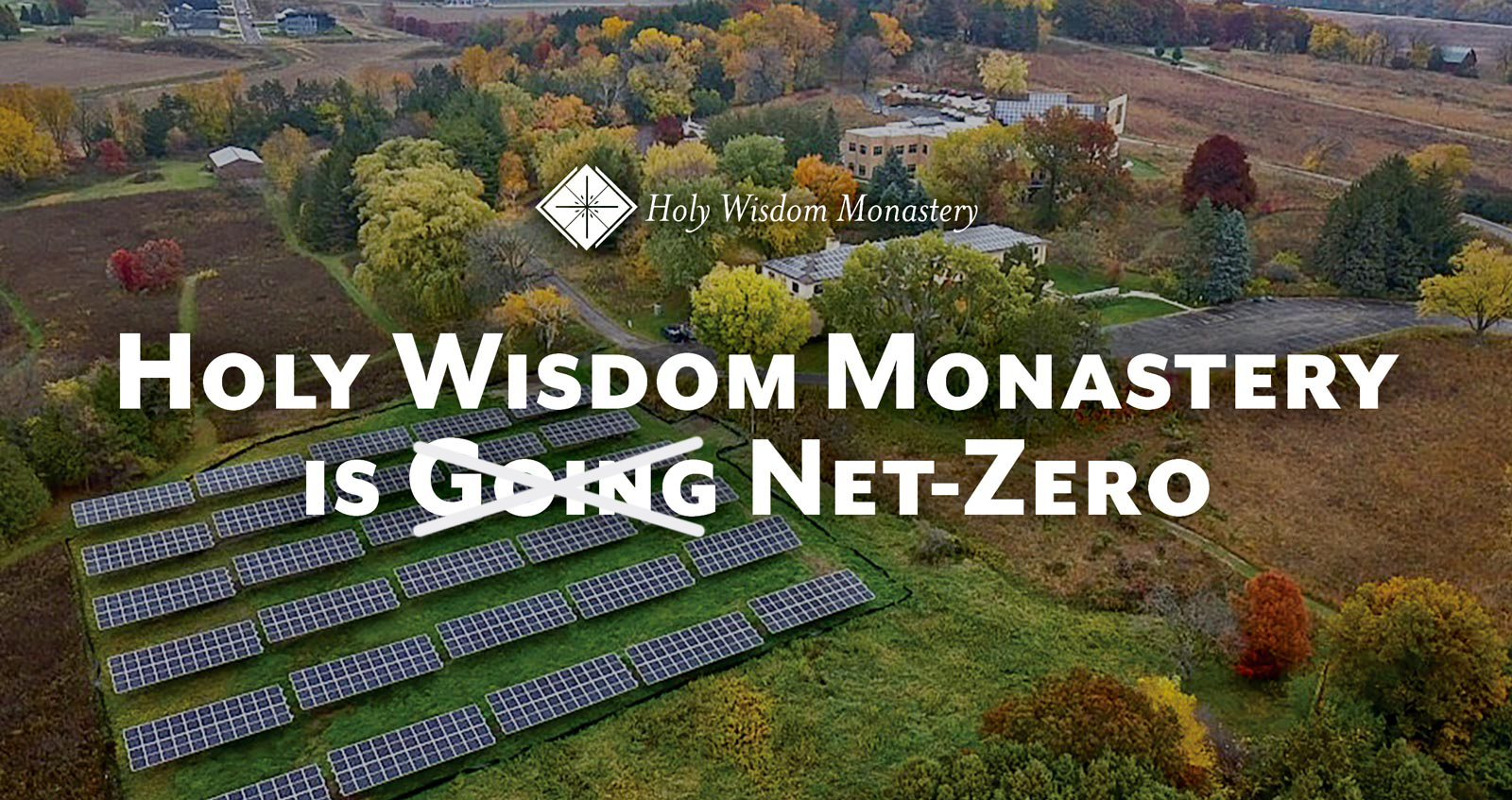
We are excited to announce that Holy Wisdom Monastery reached an important milestone in our mission to care for the earth – we are now a net-zero energy campus!
For years, the sisters at Holy Wisdom Monastery have envisioned a net-zero energy future. Now, a major milestone has been accomplished. Holy Wisdom Monastery produces 100% of our energy needs onsite from renewable resources.
The net-zero energy initiative completion was accomplished in two phases. The first phase was the installation of a 300-kilowatt, ground-mounted solar array and the interconnection of the array to the electrical grid. The second phase was the removal of an old, failing natural gas-fired HVAC system from the Retreat & Guest House and replacement with a sustainable geothermal well system.
“The Sisters at Holy Wisdom Monastery had a desire to become a net-zero energy campus since before we built our new monastery building in 2009. We reached that goal in 2024 thanks to the work of many people. Care for the earth has been a part of the Benedictine tradition beginning with St. Benedict himself in the sixth century. Since 1953, when the sisters established the monastery, care for the earth was a primary value. We are grateful to the many people who share this value by contributing time and support for the environmental work at the monastery. This is a communal effort for the good of the earth and its people.” –Sister Lynne Smith, OSB
Spring Solar Tilt – May 12, 2026
Help Us Tilt the Solar Panels
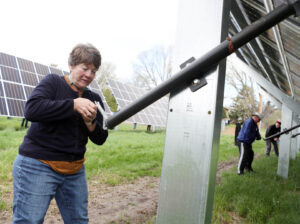
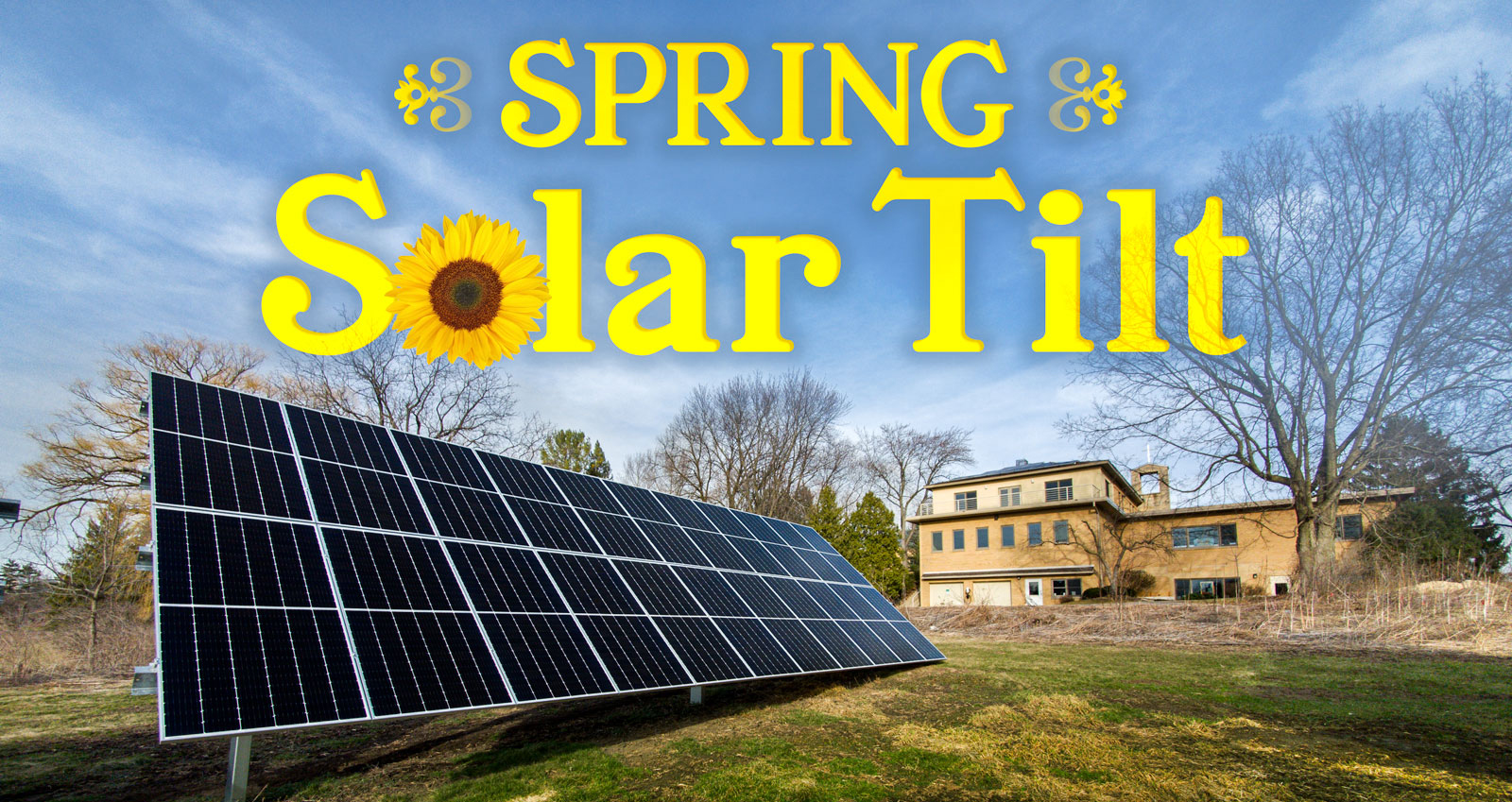
Each year we invite the communities of Holy Wisdom and the wider community to the Spring Solar Tilt. Attendees help us tilt the ground-mounted solar panels into their flat spring/summer position.
The 30-panel array can be tilted vertically or horizontally, depending on the season. In the fall/winter the panels are in their more vertical position which helps to shed snow and catch the lower winter sun more efficiently. In the spring/summer they are tilted in a flatter position to capture the most sunlight. Each panel has three hand-cranks and must be simultaneously turned at the same time so it takes 90 people to crank all the panels.
Spring Solar Tilt Registration Coming SoonRead A Story About a Lake, and a Prairie and an Array of Solar Panels
Read About the First Spring Solar Tilt in 2024
History of Caring for the Earth at Holy Wisdom Monastery
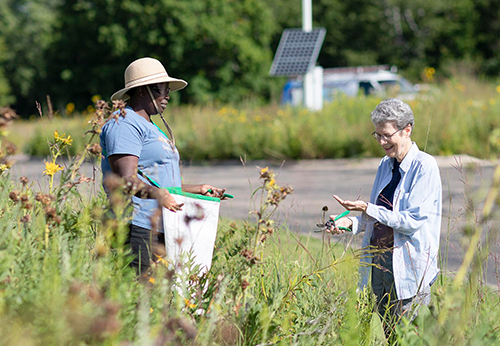 For 70 years, the Benedictine Sisters at Holy Wisdom Monastery have paid attention to the needs of the earth, nurturing 130 acres of what was once farmland into a blossoming prairie and refuge for wildlife. Today, when climate change weighs on the hearts of so many, the sisters offer their prairie to all as a place where we might heal, reconnect, and remember what can be restored.
► 1953: Sisters arrive in Madison and climb to the top of what they now call “God’s Hill” located at Holy Wisdom Monastery
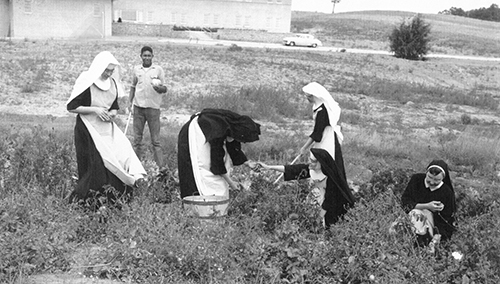 ► 1950s: Trees planted on grounds
► 1960s: Ended some of the farming on land and started the return to a pre-settlement condition
► 1970s: Conservation practices include contouring and planting of grass waterways in the areas still farmed
► 1980s: Conversion of highly erodible hillsides to woodland and savanna areas using the government Conservation Reserve Programs; started holding volunteer workdays
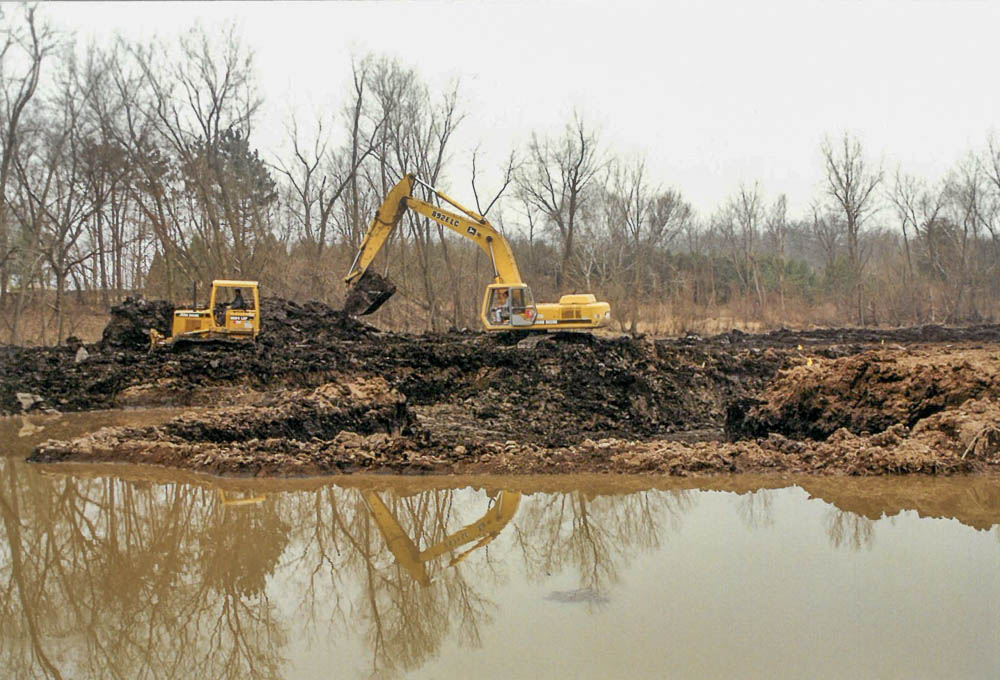 ► 1990s: First master plan for the monastery grounds completed; restored Lost Lake to original size; built detention basin, started planting prairie
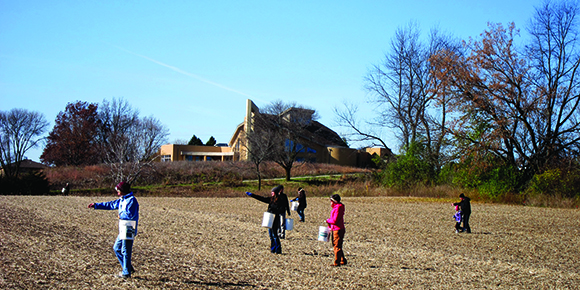 ► 2000s: Restored over 100 acres of prairie; built one of the ‘greenest’ buildings in the country
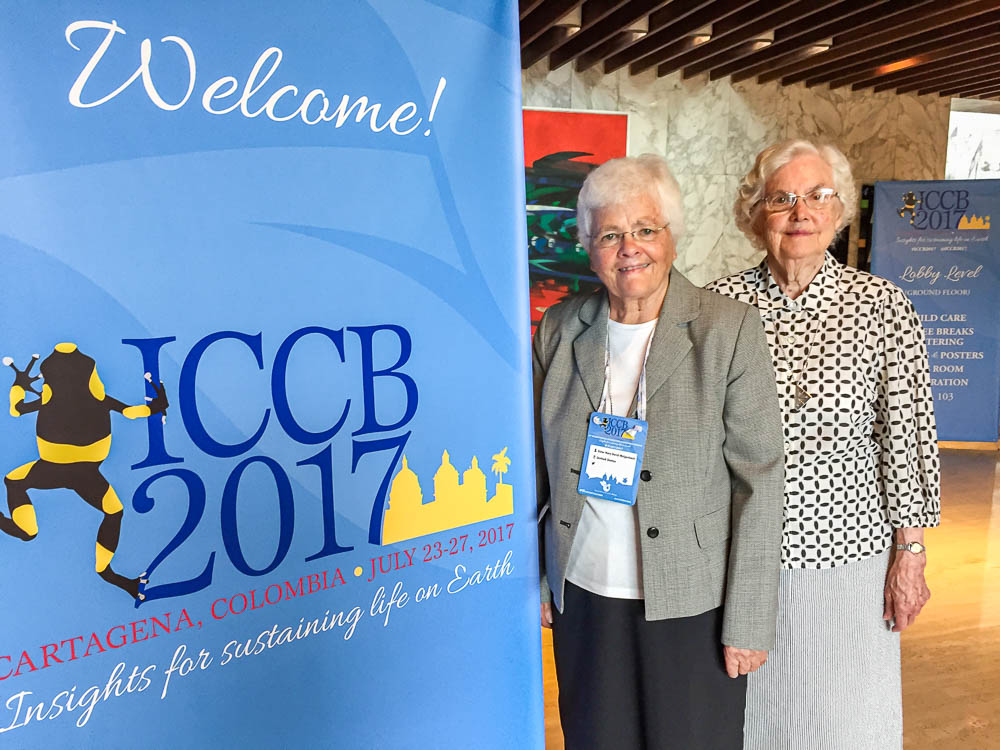
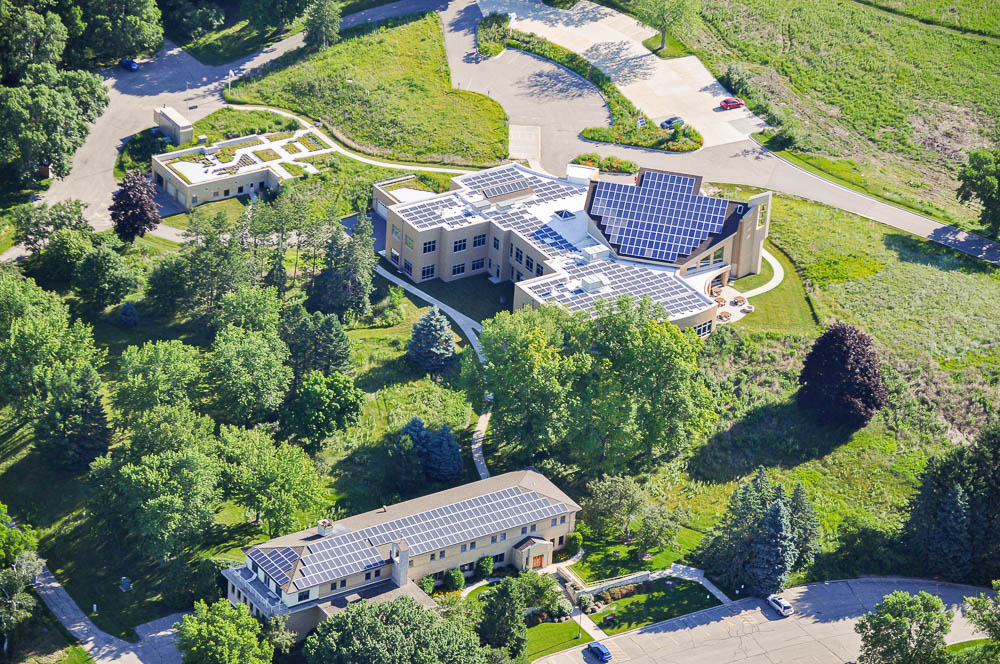 ► 2010s: Became MG&E’s largest solar customer; successfully completed $1.9 million Wisdom Prairie Project to acquire and start restoring 53 acres of farmland into native prairie and oak savanna; created Friends of Wisdom Prairie group to support environmental efforts through bimonthly workdays and educational outings, dinner lectures and grounds tours; removed hedgerows as a first step to creating an oak savanna; received international Assisi Award in 2017 for more than 60 years of environmental work from the Society for Conservation Biology.
 ► 2020s: Installed 300-kilowatt ground-mounted solar array and interconnected the array to the electrical grid; became a net-zero energy campus with the addition of a second geothermal system.